NOTE TO SELFWORK AND VOCATION

Don’t fall victim to the Peter Principle

A man with white hair in a suit sitting at the head of an empty boardroom table, facing forward, back toward the camera. Dozens of empty chairs line the outer edges of the room; windows at the rear of the room show trees outside.

It’s fun stumbling upon psychological concepts in unexpected places. I remember first learning about the Johari Window (an obscure framework for thinking about the limits of self-knowledge) in the Robert Galbraith novel The Cuckoo’s Calling (2013). It happened again the other day. I was enjoying the action thriller Nobody’s Hero (2024) by M W Craven – my middle-aged version of brain rot – when the hero Ben Koenig invoked the ‘Peter Principle’ – the idea that people tend to get promoted to the point of maximum incompetence.

Koenig is already a curious character for anyone interested in psychology. He has Urbach-Wiethe disease, which has calcified his right amygdala – apparently rendering him incapable of feeling fear (a handy attribute for an action hero). By dint of his training with various special forces, he’s also a repository of fun psychological wisdom, such as the Peter Principle, which he draws on to explain why the assassins have chosen to murder a bunch of mid-ranking infrastructure experts, rather than their superiors.

I checked it out, and the Peter Principle is a genuine concept that originated with a bestselling, semi-satirical book of the same name in 1969, co-written by two Canadians, the educationalist Laurence J Peter and the playwright Raymond Hull. There’s a simple logic to their idea – you keep performing well, you keep getting promoted, until you reach a managerial role at which you struggle and so you don’t get promoted again. Various studies have confirmed there’s a truth to the logic, at least in the context of sales, the military and academia.

I’m going to add the Peter Principle to my mental dictionary of psychological concepts – and use it as a reminder not to rest on my laurels. We can’t assume that the skills and knowledge that served us well in the past will be enough for whatever challenges we face in the future.


by Christian Jarrett

FIND OUT MORE

The article ‘The Reason Why People Become Incompetent at Work’ (2020) by David Robson discusses the Peter Principle in more detail.

The Psyche Guide ‘How to Get Promoted as a Woman’ (2020) by Jan Hills offers practical advice specifically geared towards female employees.


The eerie phenomenon that keeps popping up

A man in a tweed jacket viewing a framed German wanted poster on a wall in a museum or gallery setting.

Browsing Spotify for music to pull me through the slog of a grey February in New York, I came across the work of Labi Siffre, a 1970s artist I had never heard of. I was immediately taken with his delicate voice and simple, intimate musical arrangements.

Shortly after my precious discovery, Labi Siffre turned up in random places. I heard his crooning in coffee shops, a friend put him on at karaoke, and the singer-songwriter Lucy Dacus mentioned him as an artist who epitomised yearning. Labi Siffre was following me. Or at least that’s how I’d think about it if I didn’t know better. Instead, I thought: Baader-Meinhof.

The Baader-Meinhof phenomenon, also known as the frequency illusion, is a type of cognitive bias where, once you learn about something – such as a word, person or concept – you start to notice it more frequently. Your best friend clues you in on a slang term, and suddenly you see it endlessly in your feed. Your brother recommends a supplement, and you start repeatedly hearing ads for it. It feels eerie, especially if you don’t have a name for what’s happening.

Terry Mullen recalled feeling similarly when, after learning about a 1970s terrorist group called the Baader-Meinhof Gang, he encountered another mention of them the next day. He wrote to a newspaper about it in 1994. About a decade later, a Stanford professor proposed that a mix of selective attention and confirmation bias explains why something you are newly aware of might seem to happen all the time.

I first learned about this phenomenon in a psychology class at university. Today, when I feel it in action, I mutter ‘Baader-Meinhof’ under my breath. It helps me notice what I’m noticing, and the knowledge that my brain is primed for recognition dispels the feeling that I’m being sent some coded, mystical message – musical or otherwise.

by Hannah Seo

FIND OUT MORE

The Baader-Meinhof phenomenon is just one type of weird apparent coincidence. For a deeper dive on the subject, see the Aeon Essay ‘Are Coincidences Real?’ (2023) by Paul Broks.

For more on illusions and how attention can be misleading, check out the Psyche Idea ‘Sometimes, Paying Attention Means We See the World Less Clearly’ (2021) by Henry Taylor.


NOTE TO SELFPERSONALITY

What style of curiosity do you practise?

A man stands in a modern room looking at a large pink sculpture of tentacles outside the window.

Is there more than one kind of curiosity? I found myself reflecting on this after reading a recent study about different curiosity styles. An analysis of 483,000 Wikipedia users found that people pursue their curiosity in three ways. Some browse articles as ‘hunters’, targeting ‘specific answers in a projectile path’, and their interests are more likely to be in science and technology. Others are nomadic ‘busybodies’, who explore more, building broad, loose networks of knowledge; they gravitate toward arts, culture and the humanities.

A third group are the ‘dancers’ – a little harder to define, they tend to leap ‘in creative breaks with tradition across typically siloed areas of knowledge’, taking an unstructured and inventive approach to information-seeking, across radically different subjects.

This made me wonder what kind of curious I am. When I’m reporting as a science journalist, I tend to adopt the ‘hunter’ style. This helps me meet deadlines, but am I missing out on the serendipity of discovering knowledge like the busybody or the dancer? I’d like to believe I’m curious about the world, but realising that other people’s curiosity might be more nomadic or creative gives me pause.

Another downside to the hunter style is that it’s associated with what’s called ‘deprivation curiosity’. This is the desire to banish the discomforts of uncertainty and lack of knowledge. It can lead people to accept easy answers or false facts. It also correlates with overconfidence in one’s worldview, and lower wellbeing. I hope I’m not motivated by deprivation curiosity when I’m hunting knowledge, but I can’t guarantee that’s always true.

The psychologist William James described curiosity as ‘the impulse towards better cognition’. If I take his words and the Wikipedia study to heart, perhaps I ought to be more curious about my curiosity.

by Richard Fisher

FIND OUT MORE

Dive deeper into the psychology and neuroscience of curiosity in this open-access review paper by Celeste Kidd and Benjamin Hayden. It explores what’s known to scientists about the function, evolution and neural mechanisms of curiosity – and what unanswered questions remain.

Read the Psyche Idea ‘This Is How to Nurture Curiosity in Children (and Yourself)’ (2023) by Shayla Love, to discover how to foster a curious mindset in the young people in your life.


Embrace the monotony

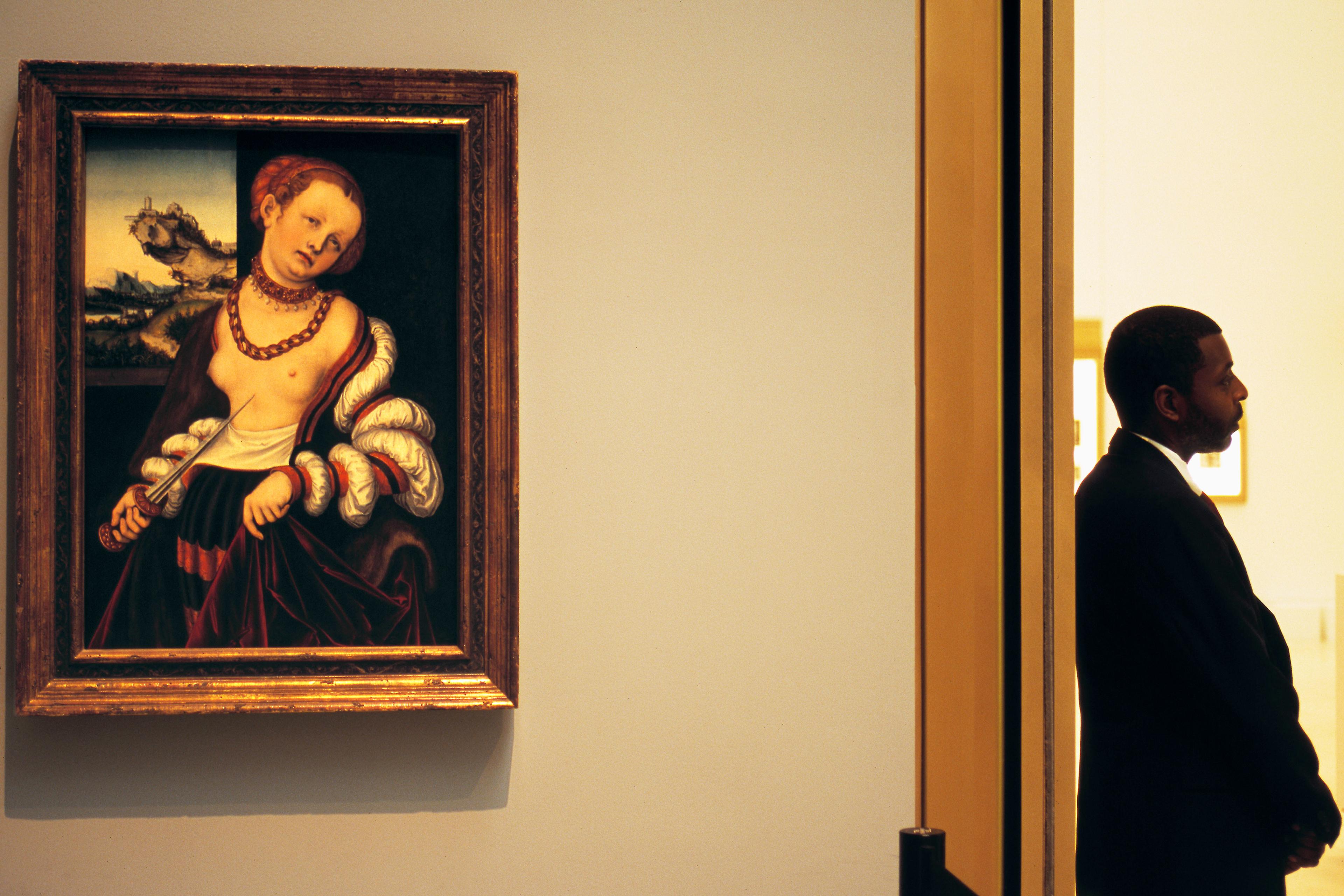
A painting on a wall with a man in a suit standing in profile beside a doorway in an art gallery.

For most of my 20s, I couldn’t brush my teeth, ride public transit, or take a walk without listening to a podcast or audiobook. Silence, I thought, was a waste of time.

But since reading All the Beauty in the World (2023), I’ve been reconsidering my relationship to dull, seemingly empty moments. In the book, Patrick Bringley recounts his decade among the watchful guards of New York’s Metropolitan Museum of Art. Standing in the Met’s echoic halls for hours on end, day after predictable day, he found that, over time, his relationship to the work slowly changed. Initial enchantment with the art gave way to boredom – and then, enlightenment. He surrendered to the ‘turtleish movement of a watchman’s time’, stopped thinking about how much of his shift was left, and let the hours drift.

I think about Bringley’s experience when I have to engage in any long, monotonous task. It might be waiting in line or on hold, vacuuming, folding laundry, or chopping vegetables for dinner. I resist the urge to fill the time with music or podcasts and strive instead for what Bringley calls a ‘princely detachment’ from time, finding the luxury and nuance in the moment.

Bringley noticed patterns in the different kinds of Met visitors. Hanging up my laundry, I notice patterns in how different articles of clothing tend to wrinkle in the wash. Bringley developed an appreciation for artworks that he initially ignored. I pay finer attention to the unique composition of facial features on the faces of people I stand in line with. I am learning, I think, to appreciate the little things.

Of course, it requires constant practice to find the peace and richness in these stretches of time. But your reward comes, Bringley says, when an hour no longer feels an hour long, and you ‘hardly remember how to be bored’.

by Hannah Seo

FIND OUT MORE

For a thoughtful conversation on how to embrace silence, and the meaning that can be found in intimate moments of quiet, listen to the episode ‘How to Sink Into Silence’ from the podcast The Gray Area with Sean Illing.

The Psyche Guide ‘Solitude Can Be Profoundly Restorative. Here’s How to Savour It’ (2025), by the psychologist Thuy-vy Nguyen, offers expert guidance on treating alone time as an opportunity, rather than a boring interlude.


I’m trying a different approach to listening

Two colourful birds on a branch one with wings spread against a blurred background.

Lately, I’ve been trying to be a better listener by using Carl Rogers’s technique of ‘unconditional positive regard’ (UPR), an idea I learned about on a recent psychology course. UPR refers to nonjudgmental acceptance of, and care for, a person – regardless of whether you agree with the things they say, think and do. It doesn’t suggest that you ignore or permit harmful behaviour, only that an individual should not have conditions they need to meet for them to be worthy of warmth and support.

When I first heard about UPR, it struck me that one reason it might be so powerful is that we very rarely come across this nonjudgmental approach in our daily lives. From socialising to contributing in meetings, it can often feel as though we’re being assessed in various ways. I thought about how comforting it is when you know you’re being held in a positive regard that isn’t going to waver, even if you have an off day or make an error – and whether this was something I could more intentionally foster for the people around me.

In practice, this has meant resisting the urge to jump in with advice, which I’ve noticed is often infused with judgment, and attempting to listen without necessarily looking for a solution. It’s revealed more of my own biases and thought patterns – such as the way I sometimes default to ‘I would/wouldn’t have done X’, rather than understanding where the other person is coming from. It’s meant asking more questions and being increasingly mindful of my nonverbal communication, such as avoiding facial expressions that communicate surprise or disagreement. Granted, I fail every day to uphold the aims of UPR, but the process of attempting it has increased my capacity for compassion – and a happy side-effect is that I seem to judge myself a little less now, too.

by Molly Williamson

FIND OUT MORE

The Psyche Idea ‘Why Listening Well Can Make Disagreements Less Damaging’ (2024) by Guy Itzchakov provides a summary of research showing how high-quality listening, incorporating a nonjudgmental approach, can reduce extremist and prejudiced views, encouraging more nuanced and complex beliefs.

For a reflective personal account on using Rogers’s theories to become a better listener, try the Aeon Essay ‘The Art of Listening’ (2022) by M M Owen.

Explore more

Photo of a person in a yellow onesie sitting at a desk using a laptop, with headphones on and a cluttered background.

How to study effectively

Forget cramming, ditch the highlighter, and stop passively rereading. The psychology of learning offers better tactics

by Paul Penn

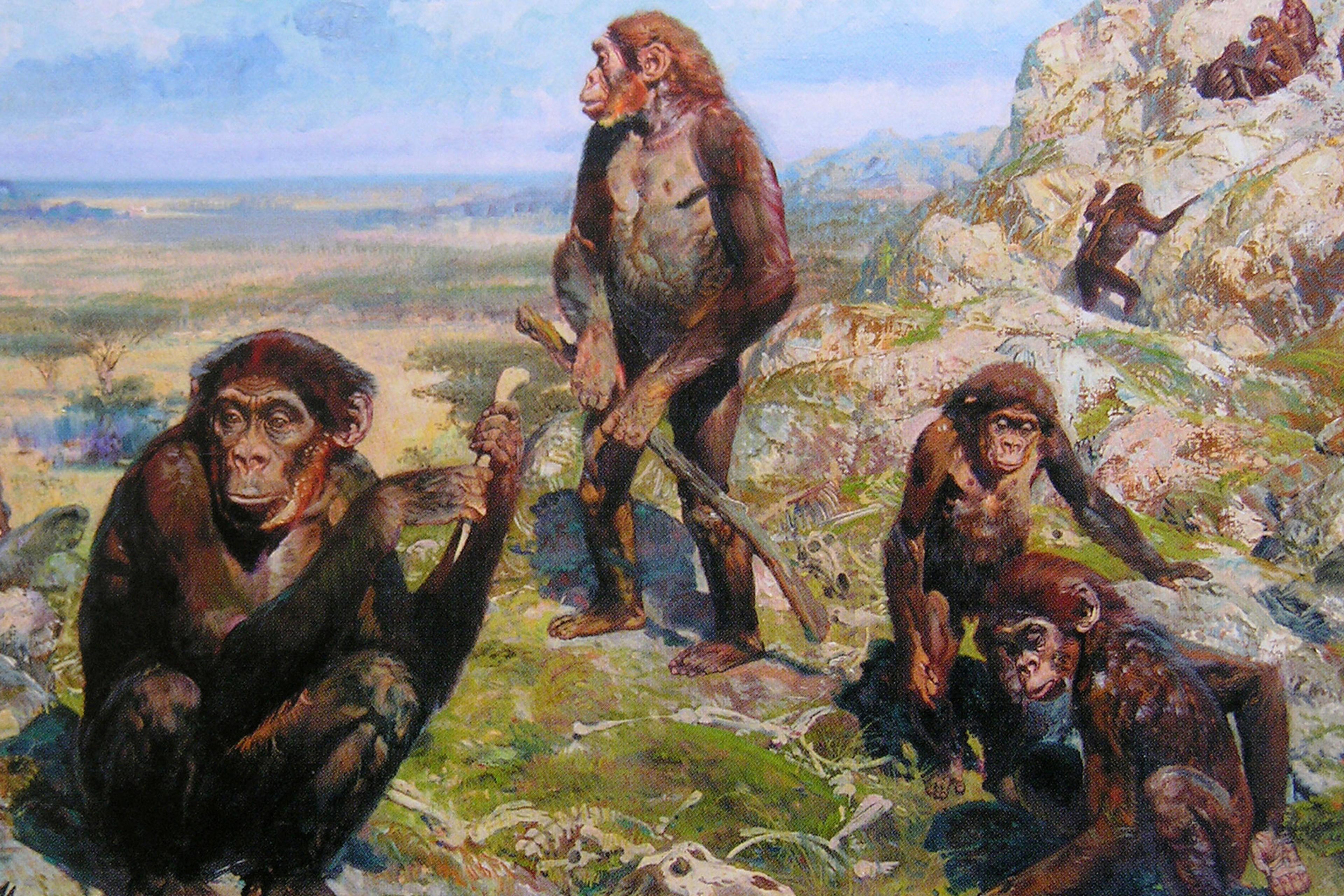
Painting of early hominids using tools in a rocky landscape with scattered animal skulls and a distant horizon.

Do humans really have a killer instinct or is that just manly fancy?

The killer-instinct idea achieved such cultural power because it came embedded in gripping stories about human nature

by Nadine Weidman

Photo of silhouetted people sitting on benches in a modern building with glass and metal architecture overhead.

How to channel boredom

Feeling bored? Learn how to use that discomfort to switch up a gear and regain control over your life and your interests

by James Danckert & John Eastwood

Black and white photo of five children sitting on a kerbside in front of a house, with playful expressions.

The self of self-help books is adrift from social and economic facts

Self-help books are a broken parachute: to win friends and influence people, take advice from a social scientist instead

by Craig Schamel

Abstract painting with geometric shapes: coloured circles and black lines on a white background.

How to change your self-limiting beliefs

Let Descartes, Kant and other philosophers help you view the world through a more positive filter and you’ll bloom

by Rebecca Roache

Marble bust of a bearded man with curly hair on a black background, sculpture artwork.

Our innate ideas prevent us seeing what is innate in human nature

We have a great deal of trouble telling what is innate and what is learned in human nature, whether ideas or emotions

by Iris Berent

Photo of a rainy motorway with heavy traffic and a sign warning of a stranded vehicle, speed limit 40 mph.

Why small annoyances can harm us more than big disruptions

A largely forgotten psychological concept helps explain the insidiousness of minor problems – and what to do about it

by Shayla Love

Photo of a woman wearing a tan dress being adjusted by three people, with focus on tailoring and fit adjustments.

How to become an expert

The path to mastery is long, winding and hugely fulfilling. Use this map to navigate and overcome any bumps along the way

by Roger L Kneebone