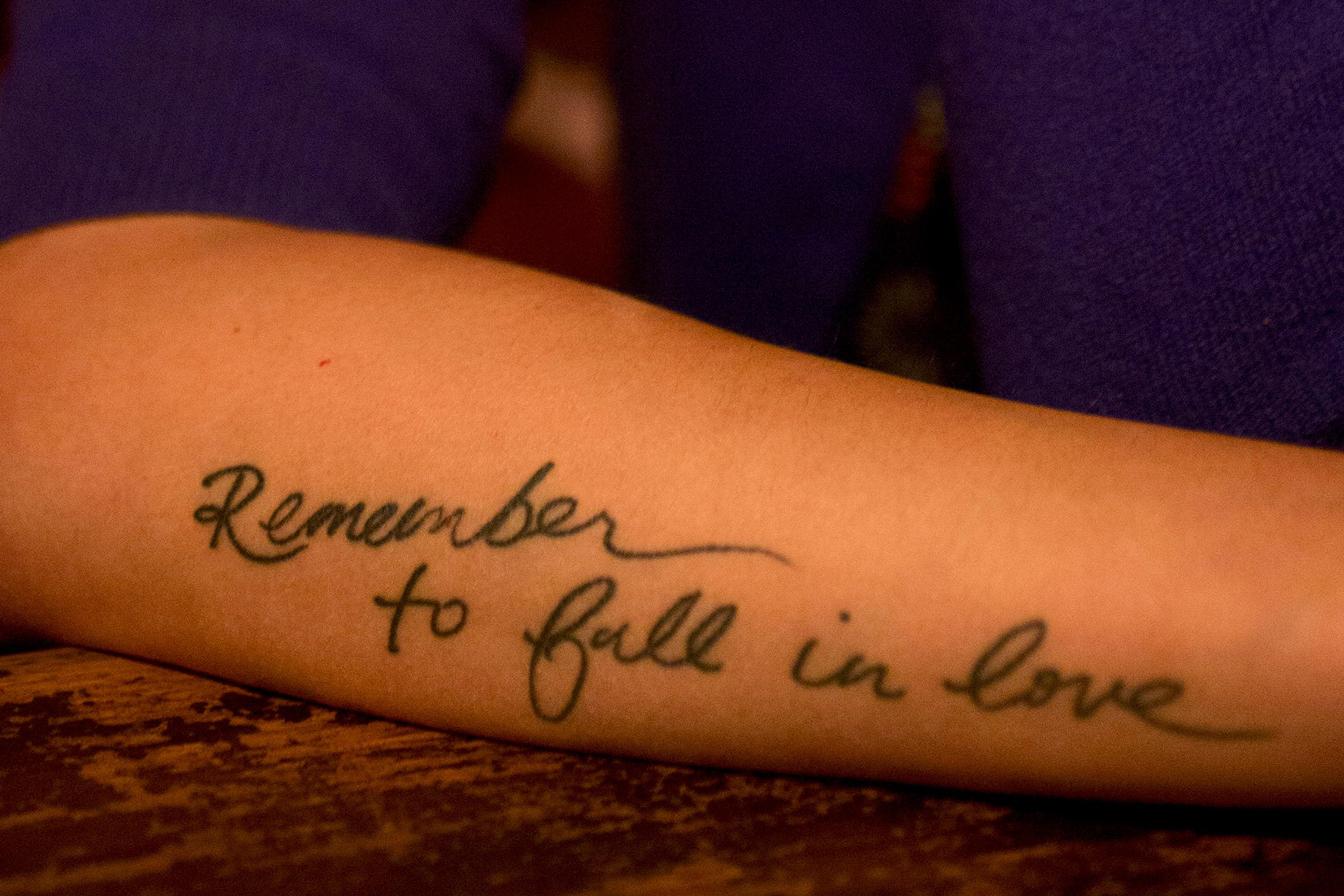
There’s an important aspect of personality that you might have never heard of, at least if you are not a psychologist. It’s called disinhibition, and learning more about it could help you better understand some of the people in your life, or maybe even better understand yourself. It is often defined as the tendency to behave impulsively, take risks, and fail to follow through with plans and goals. If you have a friend, relative or partner who often speaks before they think, acts on a whim, flakes on plans and generally seems to follow their heart – it might be because of their disinhibition.
According to research, human personality is made up of five main traits, such as extraversion (how energised someone is by social interactions and other activities) and neuroticism (how much a person experiences and reacts to negative emotions). These traits are dimensions. People can fall anywhere on the spectrum, with the two ends being polar opposites. So, for example, people who are low on neuroticism tend to be higher on emotional stability, neuroticism’s polar opposite. Those who are lower on extraversion tend to be more introverted. In this model, disinhibition is considered the opposite end of the spectrum from another of the so-called Big Five traits, conscientiousness – how persistent and goal-directed a person is. (While I’m focusing on disinhibition as a personality trait, it can also occasionally be a symptom of certain physical and mental health conditions, such as bipolar disorder, attention-deficit/hyperactivity disorder, and neurological conditions like dementia.)
While there has been a ton of research on conscientiousness and many a workshop on how we can foster this championed personality trait – because let’s face it, conscientiousness is what drives employees to be more productive at work, students to get better grades, and older adults to take their medication on time and stay healthier for longer – there has been very little discussion about disinhibition, conscientiousness’s unpopular sibling, if you will.
I first became curious about disinhibition through my broader interest in how different personality traits shape our behaviour – especially those that can get us into trouble. And, as you will see, disinhibition certainly makes that list. But what really drew me in was disinhibition’s complexity: it’s a trait that can steer us into the riskiest of realms while also opening the door to bold and exciting experiences.
My best friend in college in the United States was a textbook example of a person high in disinhibition. She once took a last-minute trip to Europe in the middle of the semester – for no apparent reason – and missed a few midterm exams, and came back with a whopping $3,000 credit card bill, an amount she definitely could not afford. She certainly had goals and aspirations – she wanted to go to medical school after college – but would often either fail to plan ahead or fail to stick to her plans.
Her disinhibition also affected her personal relationships: she would blurt out hurtful or offensive things during conversations and would later have to text people to apologise. Planning things with her was a struggle because she would usually either forget to text back to confirm plans or forget about our date entirely, which meant that I was stood up by her a lot during our college years (and if you’ve never been stood up before, trust me, it sucks).
Scoring high on disinhibition is not the same as being morally bad
The story about my friend demonstrates how disinhibition has the potential to cause serious trouble, leaving the disinhibited person and those around them frustrated because things do not get done or have unintended negative consequences (you guessed right, my friend never ended up applying to medical school, despite her genuine eagerness to become a doctor). My own research with Aidan Wright, and other studies, confirm that disinhibition is associated with dysfunction in various domains of life, from domestic living to relationships and healthcare – picture chaotic, messy living spaces, forgotten birthdays and missed appointments.
Due to these difficulties, disinhibited individuals may find themselves being labelled as ‘irresponsible’ or ‘lazy’ throughout their lives, but scoring high on disinhibition is not the same as being morally bad. Think about it this way: if your loved one has a weak immune system and, as a result, they tend to come down with a cold more often than the average person, would you say that they are a ‘bad’ person? Probably not. This is just how their body works. A similar logic goes for disinhibition. Disinhibited people are more prone to impulsive behaviour and, although they might come across as ineffective, idle or reckless as a result, they certainly are not trying or intending to be this way. The consequences of disinhibition are as frustrating for them, if not more, as they are for those around them.
Because disinhibition is a personality trait, and personality traits tend to be relatively stable throughout life, the bad news for those struggling with the consequences of this trait is that it can be hard to change. Any potential change is likely to take a long time and a lot of effort (and therapy). If you recognise yourself in these descriptions of disinhibition, accepting it as a part of who you are can make it easier to cope with its negative consequences. Or if you know someone who seems high on disinhibition, instead of berating them for their impetuousness or unreliability, and instead of taking their slips personally, trying to accept their behaviour as an essential part of who they are could help to smooth relations.
There are also some basic steps someone can take to better manage their disinhibition, beginning with knowing the triggers. Things like feeling sad, angry, bored, stressed or even hungry can exacerbate the tendency to act impulsively. Practising mindfulness can be beneficial for anyone but might be especially helpful for someone high on disinhibition. By training attunement to the present moment, mindfulness can help develop the self-awareness needed to notice personal and environmental triggers, such as ‘My sadness is making me want to turn to food and overeat,’ and then take pre-emptive action to counter that impulse whenever it arises, such as by going for a walk or calling a friend instead.
My friend was the living embodiment of Nike’s ‘Just Do It’ slogan
It’s also important to acknowledge the upsides of disinhibition – because yes, they do exist. Being more aware of them will help you tolerate and understand your friend’s or relative’s more frustrating behaviours and celebrate their appealing qualities (or if you have disinhibition, it will help you accept yourself the way you are). Remember my college friend? Why do you think I stuck it out with her despite her random hurtful blurts and the many hours of waiting for her to show up for our plans? Because she was electrifying. Punctuality, persistence and keeping promises were not her forte, but her quickness to act also gave her a certain charm: she was spontaneous, carefree and easygoing.
Like many people high in disinhibition, she was that friend who calls you up out of nowhere on a gloomy Sunday night and asks if you want to go clubbing; the friend who makes decisions seemingly effortlessly when everyone else is stuck in the weeds, weighing the pros and cons; the friend who encourages you to lead more with your heart and less with your brain. She was the living embodiment of Nike’s ‘Just Do It’ slogan, an exemplar of carpe diem. Disinhibition is certainly not all sunshine and rainbows, but it can make people come across as exciting and magnetic because they tend to do things that others have a much harder time doing: living in the moment without worrying much about the future.
Knowing what disinhibition is, what it looks like, and learning to accept it can make a big difference to people with the trait and those close to them. My friend still blurts things out sometimes or runs late to meetings, but these behaviours don’t take her – and those around her – by surprise anymore. We all now know that this is a part of who she is. Her actions are still frustrating, no doubt, but we no longer criticise her personally. It’s just her disinhibition at work. Like many traits, disinhibition is a double-edged sword. It can spark creativity, boldness and deep emotional expression – but it can also steer us into impulsive or risky territory. The key isn’t to fight it, but to recognise it. Knowing about disinhibition doesn’t excuse responsibility, but it does reshape how we share it – between the person who lives with it and those who walk beside them.