The benefits of thinking about deep time

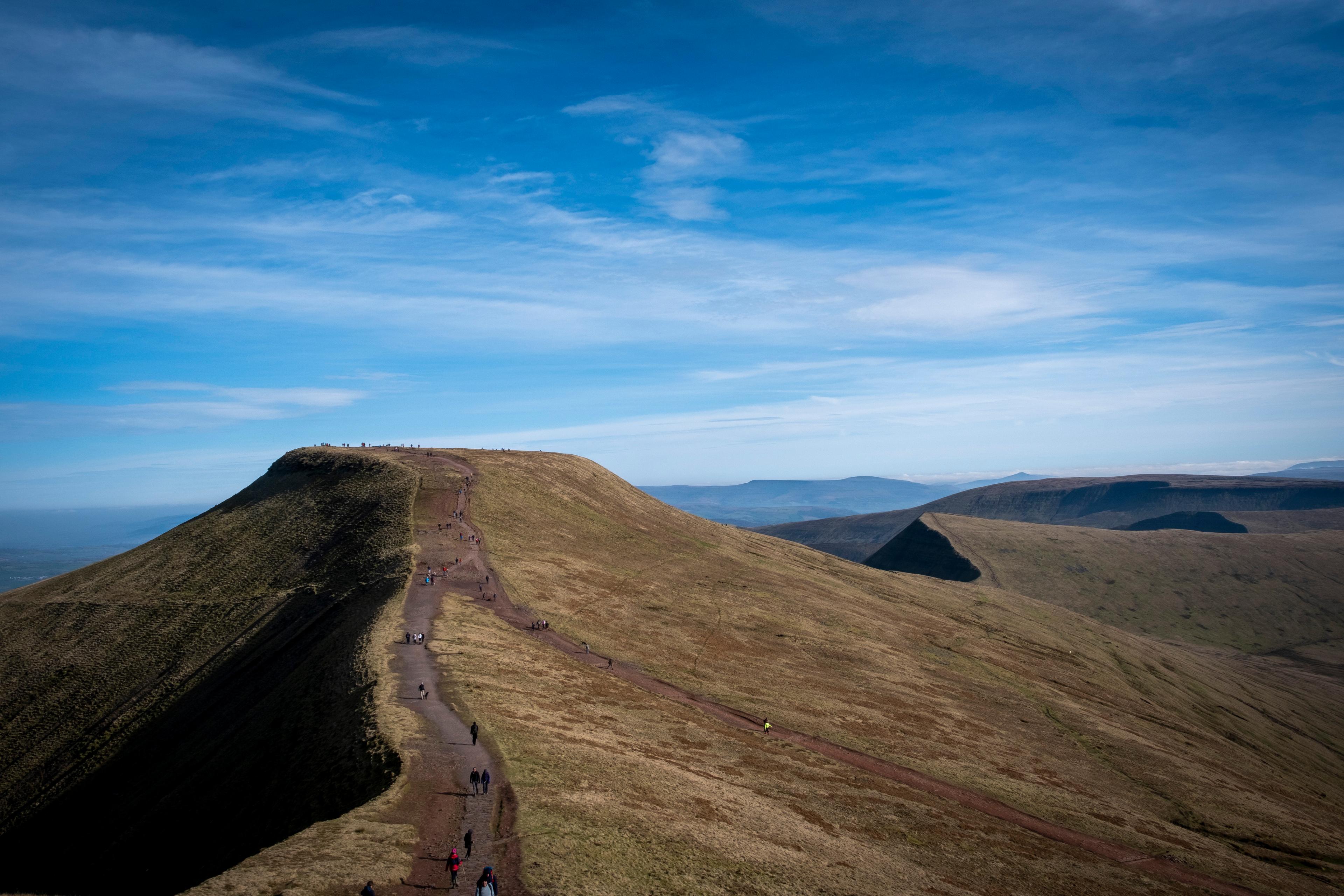
A mountain peak with a walking path and hikers, under a clear blue sky with scattered clouds.

Last September, I took part in a ‘Deep Time Walk’: a 4.6 km hike through the Welsh countryside, mirroring 4.6 billion years of Earth history. As the kilometres passed, our guide took us from the Precambrian to the Holocene, stopping periodically to share pivotal moments: life’s origin, cataclysmic bombardments, mass extinctions. Every metre we stepped was a million years.

In the last moments of the walk – our legs well exercised by this point – our guide pulled out a tape measure. The last 30 cm of the 4.6 km, he explained, represent Homo Sapiens. The final half-centimetre? Recorded human history. And right at the end, some of humanity’s most consequential events – the invention of the printing press, the Renaissance, the Industrial Revolution – could all squeeze into the final millimetre. After walking for kilometres through Earth’s past, I felt a sublime smallness, but also awe.

A growing body of research suggests there are myriad psychological benefits to feeling small in the face of nature’s vastness: it dampens the ego, and can foster feelings of humility, reciprocity and generosity. Most of these studies have focused on the physical world – boundless landscapes or the enormity of the cosmos, for instance – but one recent paper, by Matthew Hornsey and colleagues, showed there are also upsides to experiencing smallness in time.

Rather than go on a walk, the researchers simply showed people a video that compressed the Universe’s 14-billion-year history into one year, then asked them to reflect on how human history and their lives fit within that story. The psychologists wondered if it might prompt thoughts of mortality, but the effects were actually positive: in particular, people reported greater self-forgiveness and lower anxiety.

Our time on Earth is short – and, from the planet’s perspective, we are just flashes of sunlight on a pond – but it turns out that embracing that fact could be good for you.
by Richard Fisher

FIND OUT MORE

Watch the clip, used in the study by Matthew Hornsey and colleagues, that compressed the 14-billion-year history of the Universe into a year, edited from the US TV series Cosmos: A Spacetime Odyssey (2014).

You can discover more about Deep Time Walks, or download the app to walk one wherever you are.

My Psyche Guide ‘How to Do Mental Time Travel’ (2024) and my book The Long View (2023) both explore how to take a longer perspective of time.


Embrace the monotony

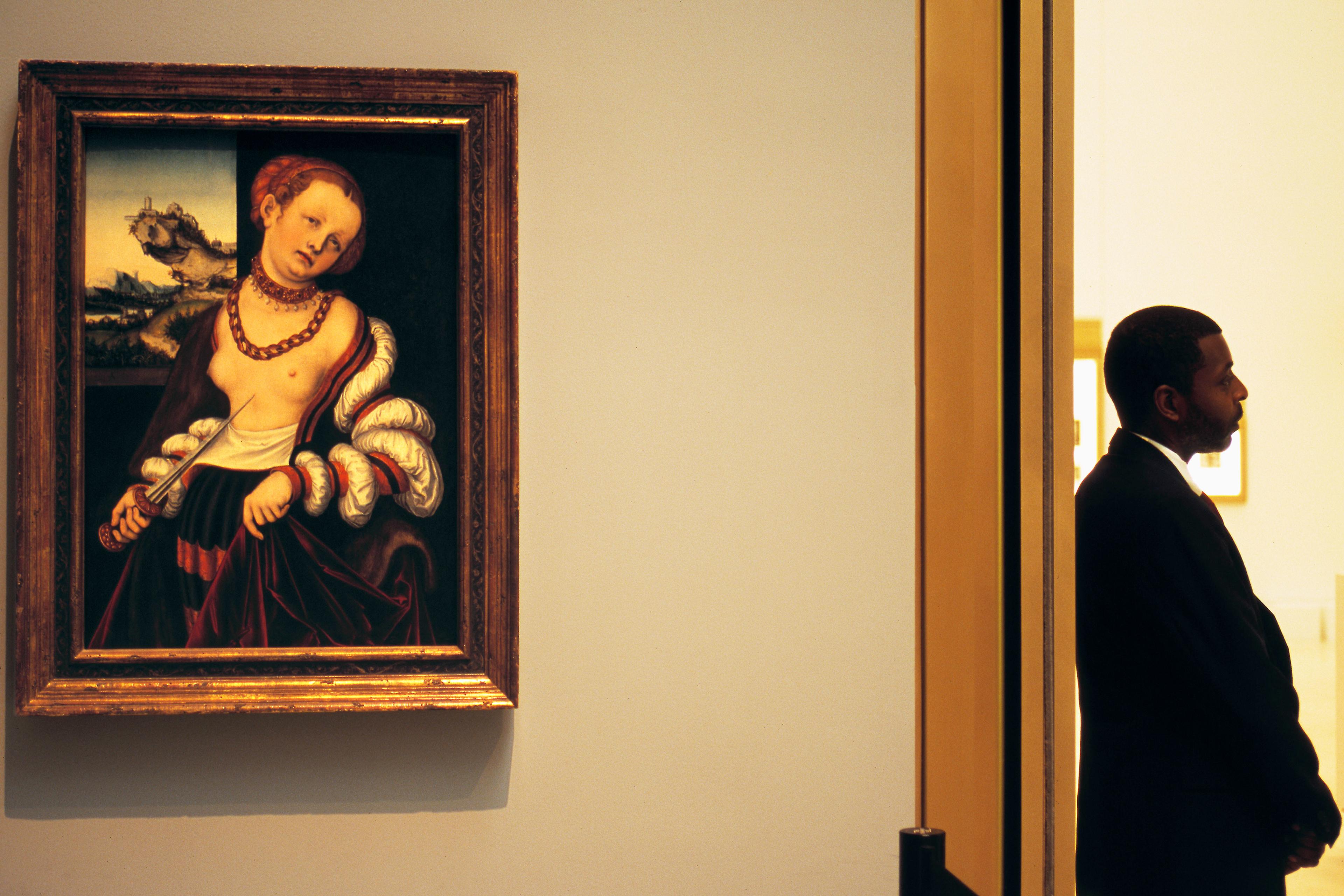
A painting on a wall with a man in a suit standing in profile beside a doorway in an art gallery.

For most of my 20s, I couldn’t brush my teeth, ride public transit, or take a walk without listening to a podcast or audiobook. Silence, I thought, was a waste of time.

But since reading All the Beauty in the World (2023), I’ve been reconsidering my relationship to dull, seemingly empty moments. In the book, Patrick Bringley recounts his decade among the watchful guards of New York’s Metropolitan Museum of Art. Standing in the Met’s echoic halls for hours on end, day after predictable day, he found that, over time, his relationship to the work slowly changed. Initial enchantment with the art gave way to boredom – and then, enlightenment. He surrendered to the ‘turtleish movement of a watchman’s time’, stopped thinking about how much of his shift was left, and let the hours drift.

I think about Bringley’s experience when I have to engage in any long, monotonous task. It might be waiting in line or on hold, vacuuming, folding laundry, or chopping vegetables for dinner. I resist the urge to fill the time with music or podcasts and strive instead for what Bringley calls a ‘princely detachment’ from time, finding the luxury and nuance in the moment.

Bringley noticed patterns in the different kinds of Met visitors. Hanging up my laundry, I notice patterns in how different articles of clothing tend to wrinkle in the wash. Bringley developed an appreciation for artworks that he initially ignored. I pay finer attention to the unique composition of facial features on the faces of people I stand in line with. I am learning, I think, to appreciate the little things.

Of course, it requires constant practice to find the peace and richness in these stretches of time. But your reward comes, Bringley says, when an hour no longer feels an hour long, and you ‘hardly remember how to be bored’.

by Hannah Seo

FIND OUT MORE

For a thoughtful conversation on how to embrace silence, and the meaning that can be found in intimate moments of quiet, listen to the episode ‘How to Sink Into Silence’ from the podcast The Gray Area with Sean Illing.

The Psyche Guide ‘Solitude Can Be Profoundly Restorative. Here’s How to Savour It’ (2025), by the psychologist Thuy-vy Nguyen, offers expert guidance on treating alone time as an opportunity, rather than a boring interlude.


How slow breathing calms down your brain

Photo of a man in profile with glasses, eyes closed, head tilted back under a structure with a grid-like roof.

Just breathe! When you’re gripped by anxiety, hearing this well-intentioned advice can be infuriating. Compared with the power of my body’s fight-or-flight response, the notion that I can find calm by tuning into my breath feels almost fanciful.

But recently I came across a study in Scientific Reports that caught my eye because it showed that slow breathing makes a difference not just to how people feel, but to their brain activity. The results have increased my confidence that breathing can make a meaningful difference.

The researchers set things up so their participants either knew they’d be exposed to horrible images (such as pictures of injuries and scary animals) or they thought there’d be a chance they might be – this latter condition acted as a simulation of ‘anticipatory anxiety’, like when you have a dentist appointment and you’re not sure if you might need a horrible procedure.

Anticipatory anxiety increased the aversive impact of the images – both in terms of how bad the participants felt after looking at them, and in terms of the electrical activity in their brains, specifically in the beta-frequency range that’s known to be amplified when we’re stressed or worried.

Crucially, however, the effects of anticipatory anxiety on subjective feelings and brain activity were dulled if the participants engaged in 30 seconds of slow breathing (six seconds in, six seconds out) before the task. In fact, after slow breathing, the participants had lower beta brain activity in the anxiety condition than they had in the non-anxiety condition after normal breathing (two seconds in, two seconds out).

It’s a small study and it’s long established that neuroscience findings can be seductive, so I’m wary of being overly gullible. But I thought the design was clever. It showed that, while anxiety can intensify our difficult experiences, a simple, slow-breathing technique can mitigate these effects.

by Christian Jarrett

FIND OUT MORE

Check out the Psyche Guide ‘How to Breathe’ (2022) by Martin Petrus.

Read the results of another study published this year that found slow-paced breathing can assist emotional regulation.


NOTE TO SELFEMOTION REGULATION

Seeing all the parts of a tough situation

An adult and child looking at Santa inside a large snow globe with snowy trees at dusk.

When I’m going through something stressful, I have a strong urge to think out loud about it with someone I trust. There are probably several reasons I end up feeling better: my listener helps me avoid catastrophic thinking, or reminds me that they have my back if things get worse. But another likely reason is that having the chance to describe a difficult situation in detail – even if you’re just describing it to yourself, as in a journal – invites you to see the full picture, and in many cases, it’s not all bad.

Research by Christian Waugh and colleagues at Wake Forest University in North Carolina underscores this and highlights its potential for helping us manage our emotions. They focused largely on people’s experiences during the COVID-19 pandemic, based on data they collected then. When people reflected on a stressful experience they’d been having, and were prompted to describe six specific elements of the situation, they tended to list at least one that was positive (such as spending more time with family during the pandemic). Having more positive elements in the list was associated with feeling less negative and more positive emotion following the task. Taking some time to elaborate on one of the positive aspects seemed to help people feel better, too.

It can be annoying to be told to ‘look on the bright side’ or ‘find the silver lining’. But personal trials often come with opportunities for growth or self-insight; grief or separation sometimes lead to new connections; and even mundane sources of frustration (a traffic jam, say) can contain small points of pleasure or relief (enjoying a song on the radio that you would’ve missed). Where there are such leavening factors, taking a moment to talk or write about the experience could help us make the most of them.

by Matt Huston

FIND OUT MORE

To learn about other accessible means of managing emotions, start with this Psyche Idea written by Christian Waugh himself: ‘Asking One Simple Question Can Entirely Change How You Feel’ (2022).

In an episode of the Speaking of Psychology podcast (produced by the American Psychological Association), the psychologist James Pennebaker talks about his research on expressive writing and how it makes people feel better.


To see your home city anew, try this

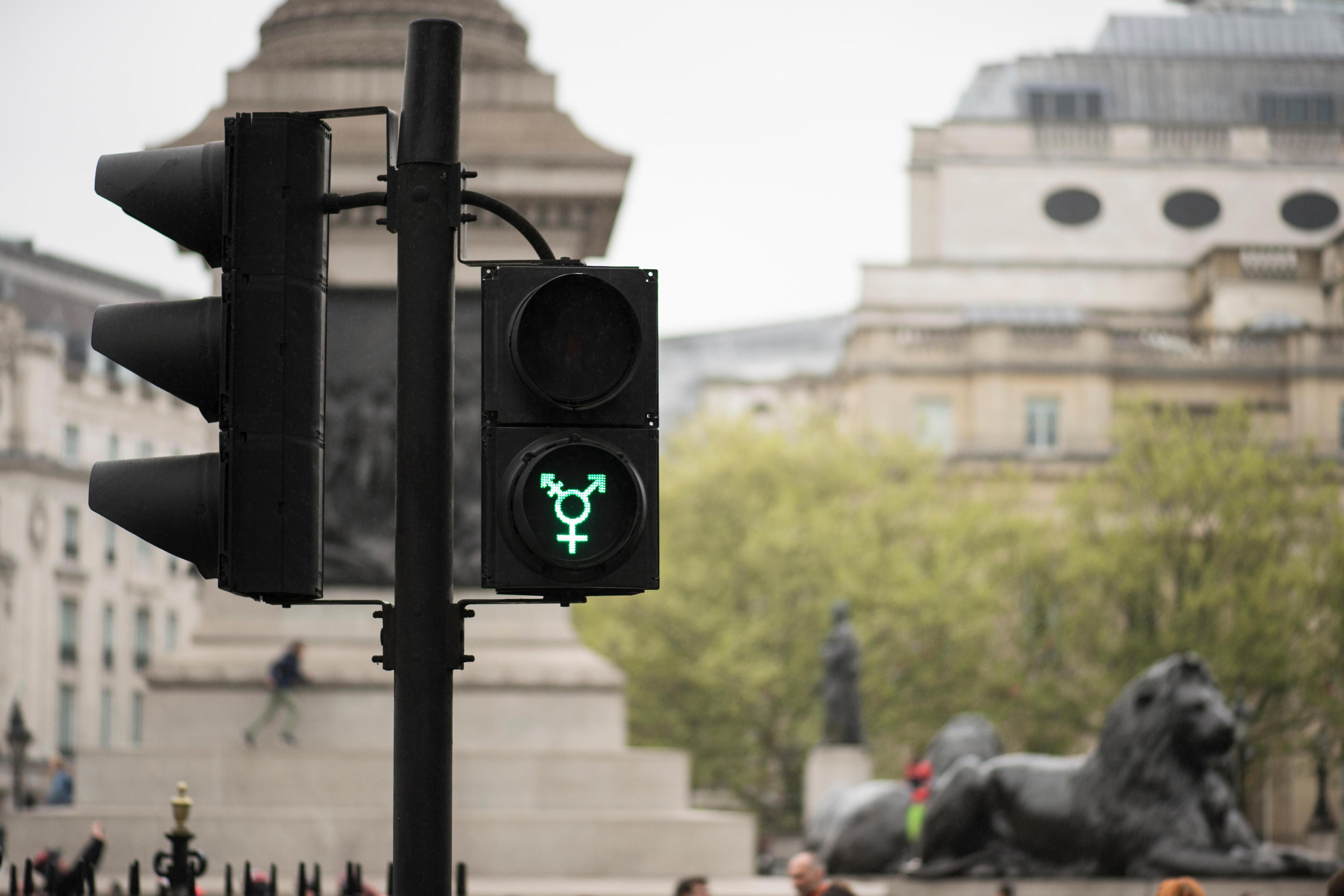
A traffic light showing a green transgender symbol in front of a historic city square with statues and buildings.

One of my favourite walking routes though London goes from Waterloo Bridge to the London Eye, across the Thames to Big Ben, up Whitehall, and on to Soho for much-needed refreshment. But this spring, when a friend was visiting me from the United States, something happened on that familiar walk that made me see my home city with fresh eyes.

At a crossing by Trafalgar Square, she stopped in her tracks, though the lights were green. ‘What’s that?’ She pointed to the light flashing, not with the usual walking man, but with two female symbols, intertwined. ‘Oh that,’ I said shrugging. ‘The gay traffic lights of London.’ They’d gone up years ago, for the annual Pride Festival, and were so popular, they’d stayed – a little like my friend and I, who had a blast running back and forth between crossings so she could photograph all the LGBTQ+ symbols. Though she lives in San Francisco with her wife, these lights tickled her pink – and now they had the same effect on me.

This is an example of what the social psychologist Clayton Critcher at the University of California, Berkley calls the ‘vicarious construal effect’. By seeing an experience through someone else’s eyes, you can capture a feeling you’ve lost – or one you never even had. In an interview, Critcher said: ‘Simply trying to think about what someone else might see actually changes the way we see and interpret what we’re doing, changes the emotions we feel.’

This effect works whether rediscovering your hometown or more fully understanding another’s lived experience. So next time you notice yourself becoming oblivious to the place where you live, try to see it through the eyes of a visitor. Or better still, invite one over and share their perspective.

by Elena Seymenliyska

FIND OUT MORE

For looking at the world with the wide eyes of a child, check out the Psyche Guide ‘How to Revive Your Sense of Wonder’ (2022) by Frank Keil.

And for more on the joys of exploring with an open mind, follow the Guide ‘How to Wander’ (2023) by Jordan Fisher Smith.

Explore more

Photo of a street with vintage cars, motel signs and a person leaning on a truck holding a broom under a blue sky.

How to alter the passage of time to feel fast or slow

Knowing the psychology behind why moments drag or whizz by can give you a degree of control over your experience of time

by Martin Wiener

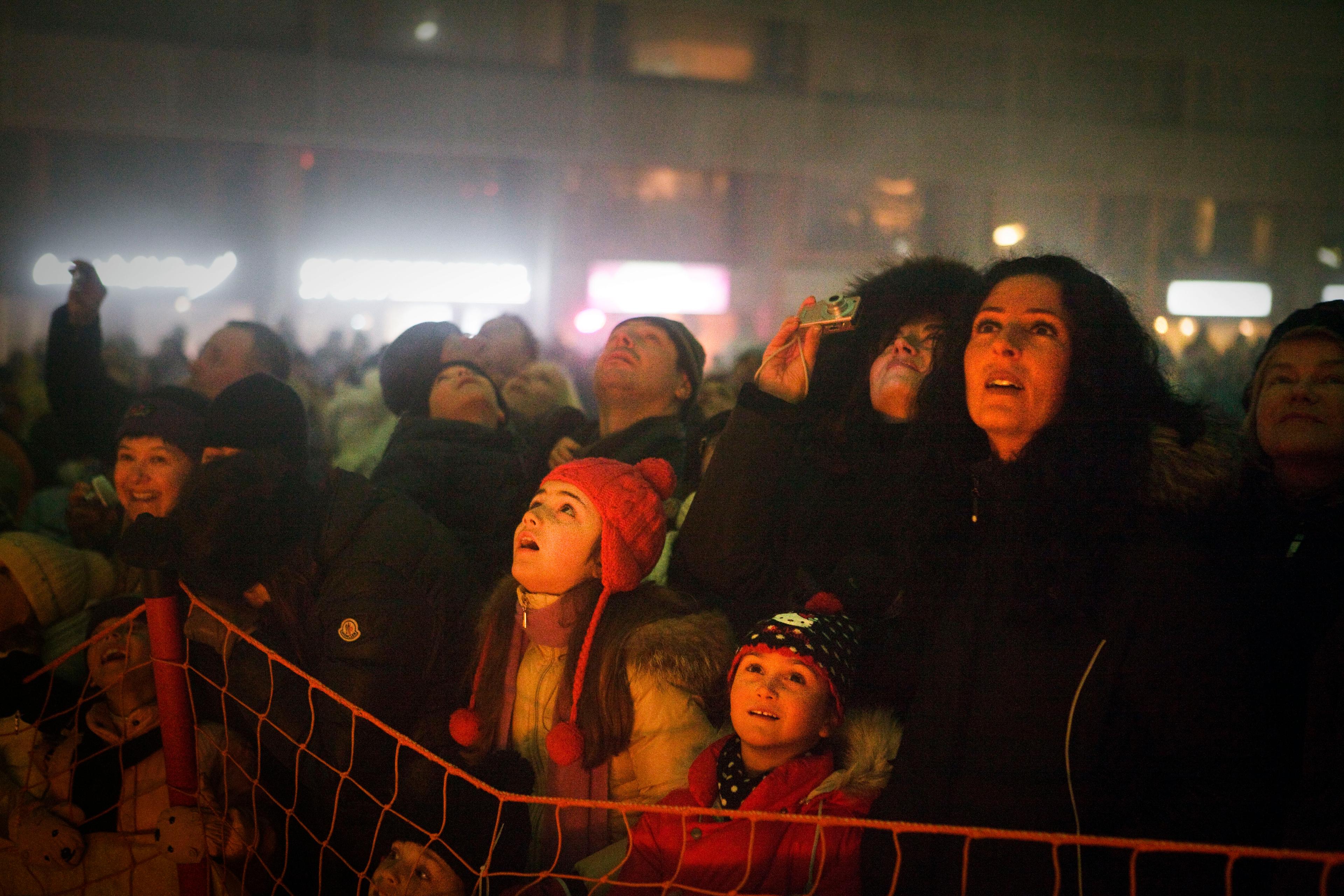
Photo of a crowd watching an event at night, faces lit, some taking photos, children in colourful hats by a barrier.

How to experience more wow

Awe might seem an unobtainable luxury to many but, with the right approach, you can enjoy it daily – no mountain required

by Summer Allen

Photo of two people on a ledge under an umbrella during dusk overlooking a cityscape and the sea.

You can be a materialist and find meaning in the universe

My hard-nosed materialism led me to an existential crisis, but then I realised the difference between science and scientism

by Jessica Tracy

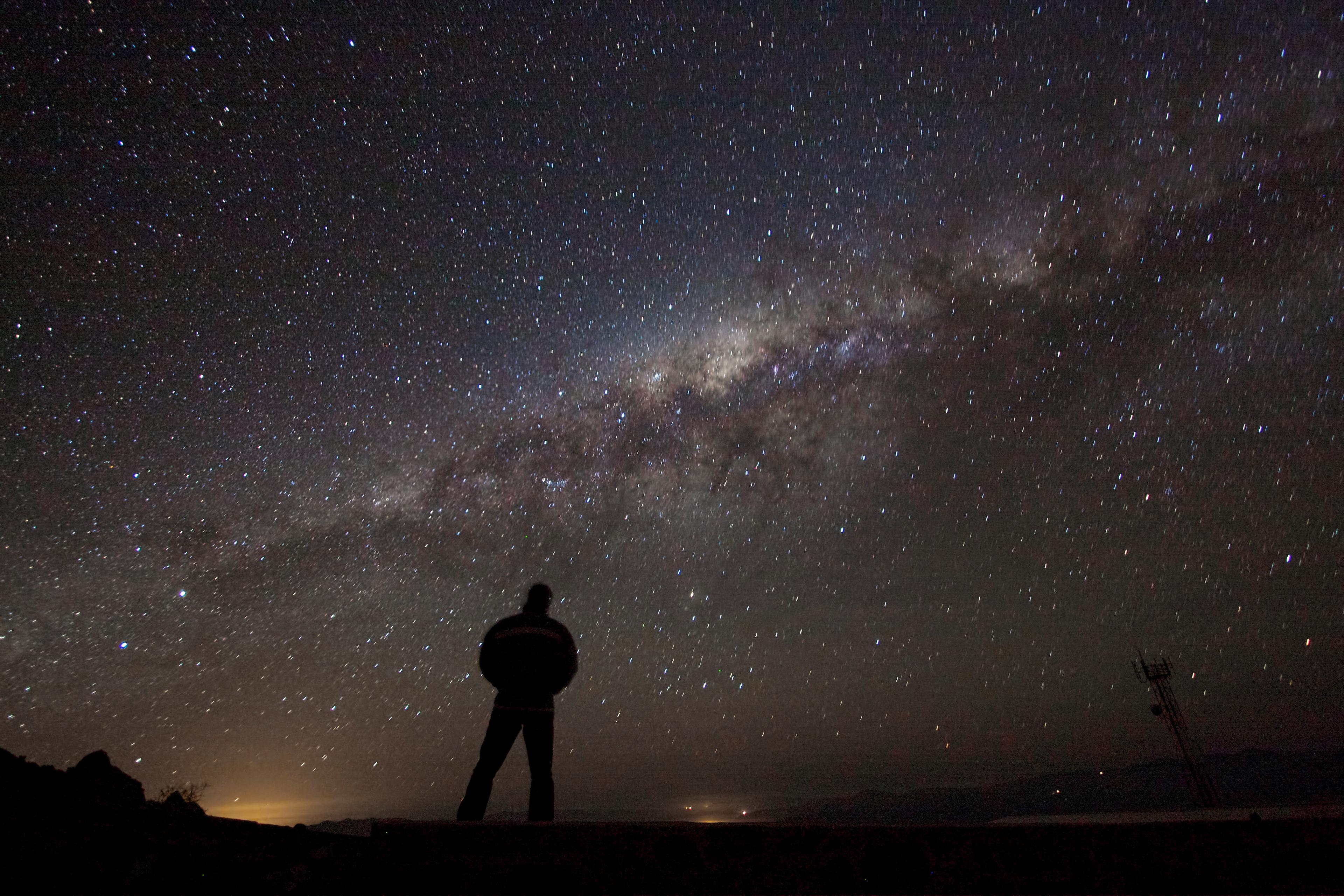
Photo of a person silhouetted against the Milky Way galaxy in a starry night sky, with a faint horizon glow.

The ‘panzoic effect’: the benefits of thinking about alien life

Reflecting on the potential for extraterrestrial life can inspire awe and have a profound effect on your worldview

by Graham Lau

Photo of a butterfly on purple flowers with orange centres in a garden setting.

Observing nature in your backyard is not dull but radically significant

Instead of ‘helicopter science’, we need Gilbert White’s intimate study of nature to understand global environmental change

by Yadvinder Malhi

Photo of a vibrant blue flower beside orange flowers with a blurred green background.

Slow down, it’s what your brain has been begging for

It’s no small task to live a life of sustained attention. So slow down, and give your brain a break to do its work

by Teodora Stoica

A painting depicting a cosmological diagram with an abstract human figure and various mythical creatures.

Ancient Indian texts reveal the liberating power of metaphysics

Indian metaphysics presented a philosophical route to a higher level of existence beyond limits of space and time

by Jessica Frazier

Photo of a couple embracing at sunset with a blurred cityscape and colourful sky in the background.

How ‘stirrings of the heart’ shape your experience of time

New research is showing the embodied nature of time perception and how it can fluctuate in tune with the heart’s beats

by Shayla Love